
Blog
It’s Time for Britain to Legalise Cannabis

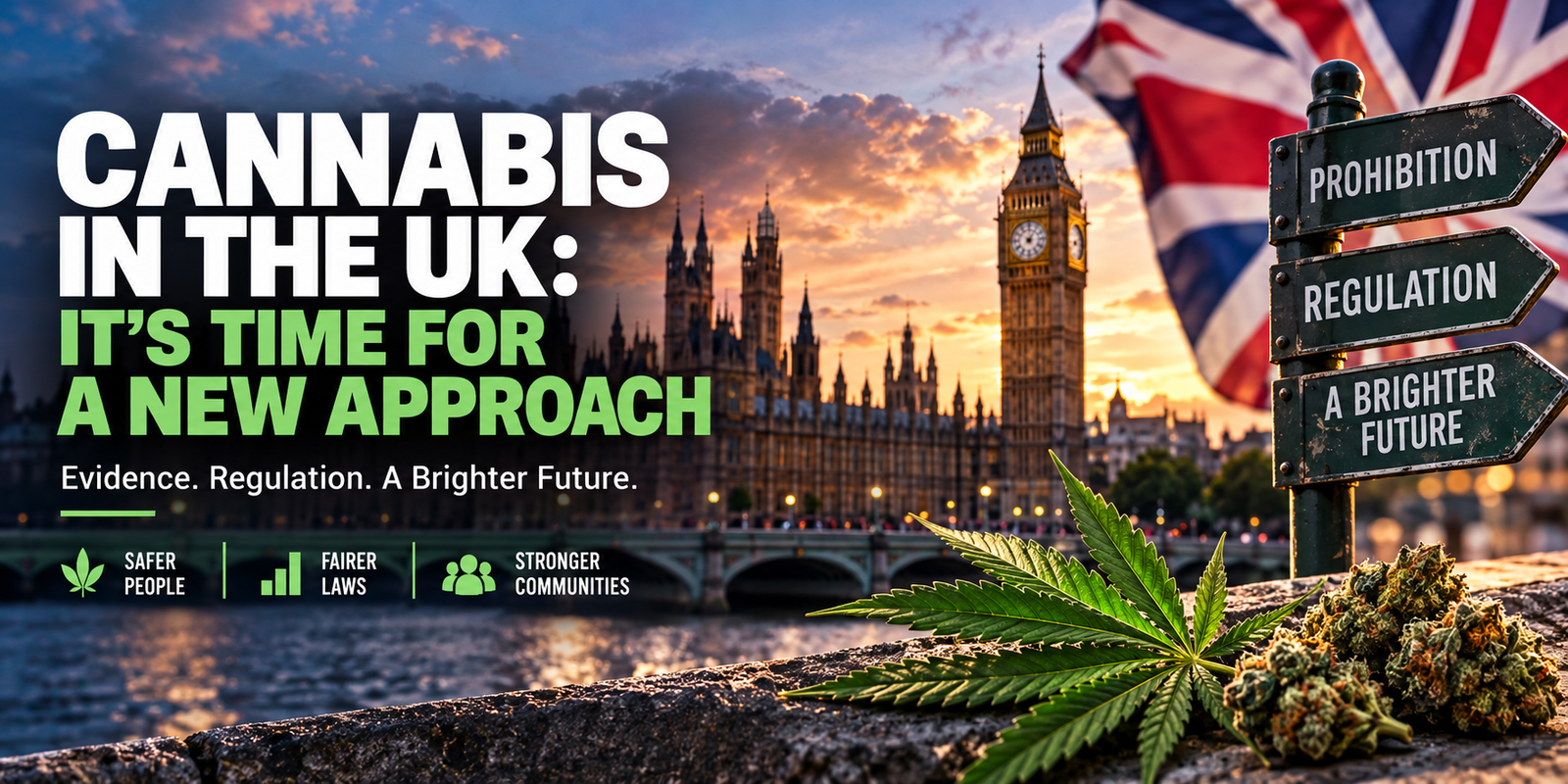
Britain to Legalise Cannabis: In 2026, Britain stands apart. Cannabis remains a Class B drug, technically punishable by five years in prison for possession and 14 for supply. The Home Office is clear: there are “no plans” to legalise. Yet, walk down any city street, and the smell of cannabis is familiar. Ask young people where they get it, and the answer isn’t the pharmacy or a licensed shop — it’s the black market.
We are, in short, living with the worst of both worlds: cannabis is everywhere, but it’s completely unregulated.
Meanwhile, around us, the world is moving on. Germany became the largest European nation to legalise personal possession and home growing in 2024. Malta and Luxembourg already allow limited legal cultivation. The Netherlands and Switzerland are running experiments with legal supply chains. Canada has been regulating cannabis for nearly seven years. Even parts of the United States that once led the “war on drugs” are now thriving thanks to a regulated cannabis industry.
So why is Britain stuck? And more importantly, why should we finally break free from prohibition?
The public is ahead of Westminster.
Let’s start with opinion. A YouGov poll in May 2025 found that a majority of Britons support the decriminalisation of small amounts of cannabis. That doesn’t mean a free-for-all — it means ordinary people no longer think it makes sense to saddle someone with a criminal record for a joint. MPs, however, are much more cautious. A separate poll of parliamentarians in January found that half were still opposed to legalisation.
This gap between public opinion and politics is typical of Britain’s drug debate: voters are quietly progressive, while Westminster remains paralysed by the fear of headlines.
But public patience is wearing thin. We’ve seen it with same-sex marriage, with climate change, and with assisted dying. Eventually, the public mood turns caution into cowardice.
The medical paradox Britain to Legalise Cannabis
Technically, cannabis is already legal in the UK — at least for medicine. In 2018, ministers opened the door for specialist doctors to prescribe cannabis-based products. Families with children suffering from rare epilepsies, who had campaigned tirelessly, believed they had won their battle.
In reality, NHS access has been dismal. Only a handful of prescriptions have been written through the NHS, while thousands of patients are forced into the private market, paying hundreds of pounds a month. Others quietly return to the illicit market, where products are cheaper but uncontrolled.
It’s a cruel paradox: cannabis is legal for medicine but out of reach for the very patients it was meant to help. That paradox exposes the deeper truth: our system already acknowledges cannabis can help and that adults can use it responsibly. What it refuses to do is regulate it in a way that makes sense.
Why prohibition fails – Britain to Legalise Cannabis
There are four obvious reasons why prohibition isn’t working.
First, safety. Illegal cannabis is untested, unlabelled, and can be dangerous. Researchers in Bath and Manchester recently found synthetic cannabinoids and contaminants in products sold on the UK market. Consumers don’t know what they’re inhaling. Regulation, by contrast, means lab testing, potency labels, child-proof packaging and recalls.
Second, crime. Every pound spent on cannabis today goes into the pockets of organised crime. A regulated market would cut them out. The Transform Drug Policy Foundation estimates that legalisation could generate around £1 billion a year in tax revenue and save £300 million in criminal justice costs. That’s money for hospitals, schools, and policing serious crime.
Third, fairness. Enforcement of cannabis laws falls hardest on minorities. In England and Wales, police stop and search Black people for drugs far more often, despite lower self-reported usage rates in some surveys. Ending prohibition means ending a system that unfairly criminalises.
Fourth, youth access. Dealers don’t check ID. Licensed shops do. In Canada, after legalisation, the share of adults sourcing cannabis legally rose from just over a third in 2019 to nearly three-quarters by 2024. That means fewer young people exposed to dodgy, unregulated products — and more opportunities for genuine education about risks.
The counterarguments — and why they don’t hold
Opponents worry that legalisation will increase use. Evidence from North America shows some rises, especially among adults, but not the dramatic surge predicted. Among under-18s, the effect has been mixed — in some areas, youth use has stayed flat or even fallen. What matters is how you regulate: cap THC levels in edibles, tax very strong products, and invest in education.
Another concern is mental health. It’s true: heavy use of high-THC cannabis, especially at a young age, is linked to risks of psychosis. But that’s an argument for regulation, not prohibition. Right now, consumers have no idea how strong their cannabis is. In a legal market, you can guide people toward safer, balanced products and use tax revenue to fund mental health services.
Road safety is also raised. Cannabis impairs driving, and we should take that seriously. But again, the answer is enforcement and education, not clinging to prohibition. Drink-driving deaths didn’t justify banning alcohol; instead, we enforced limits, tested drivers, and ran campaigns. The same approach works for cannabis.
Designing a British model
We don’t need to copy California or Colorado. Britain can build a cautious, responsible system:
Start with pilots: allow non-profit “cannabis clubs” or regional retail schemes, study the results, then expand.
Set strict product rules: mandatory lab testing, plain packaging, and potency-linked taxes.
Keep retail boring: no neon shops or lifestyle branding; think pharmacies, not nightclubs.
Protect young people: enforce a legal age of sale, with serious penalties for breaches.
Ring-fence tax revenue: fund youth services, addiction treatment, and local policing.
Clear old records: expunge past cannabis possession convictions to end the unfair legacy of prohibition.
This is not radical. It’s measured. It’s what our neighbours are doing. And it’s what the evidence supports.
Why now?
Because waiting has a cost. Every year, thousands of people receive criminal records for minor cannabis offences. Every year, organised crime profits. Every year, patients are denied affordable access to medicine. Every year, young people buy untested products from dealers instead of safer products from regulated shops.
Meanwhile, Britain falls behind. Germany is learning lessons from its cannabis clubs. Canada is refining its system with potency-based taxes. The Netherlands and Switzerland are running careful experiments. We should be learning from them — not pretending cannabis will go away.
The political path
No major party in Westminster is campaigning for full legalisation. But change rarely comes from the top down. It starts with public opinion, moves through local pilots, and then becomes inevitable. That’s how it happened with same-sex marriage. That’s how it happened with Sunday trading, with the smoking ban, with plastic bags.
The path is clear:
Decriminalise possession of small amounts, ending criminal records for personal use.
Pilot legal supply through cannabis clubs or regional schemes, with rigorous evaluation.
Scale nationally once the evidence is in.
This path acknowledges political caution while creating the evidence ministers demand.
The bottom line
Cannabis is not harmless. But prohibition is harmful. It fails to keep people safe, fuels crime, criminalises unfairly, and leaves young people more exposed, not less.
A regulated market is not a leap into the dark — it’s a step into the light. It means safer products, fewer arrests, less crime, fairer enforcement, and new revenue for public services. It means aligning our laws with reality.
In 2025, Britain can continue pretending that prohibition works, or it can catch up with the evidence, with its neighbours, and with its own people.
It’s time.
For more usage tips, check out our How to Use a Dry Herb Vaporiser (Step-by-Step Guide). 👉 Or explore our full collection of vapourisers to find your ideal match.
About the Author
Written by the DopeVapes editorial team — dry herb vaporiser specialists with over a decade of experience helping UK customers prepare, pack, and dose their vapourisers for maximum performance.